Symptom · Viking built-in refrigeration
Why is the door frame wet?
In one sentence
Room air is meeting a surface cold enough to condense the moisture out of it, which on a sound built-in should not happen — so the seal, the hang of the door or the setting is behind it. — Viking Repair Denver Pros, (720) 903-2603
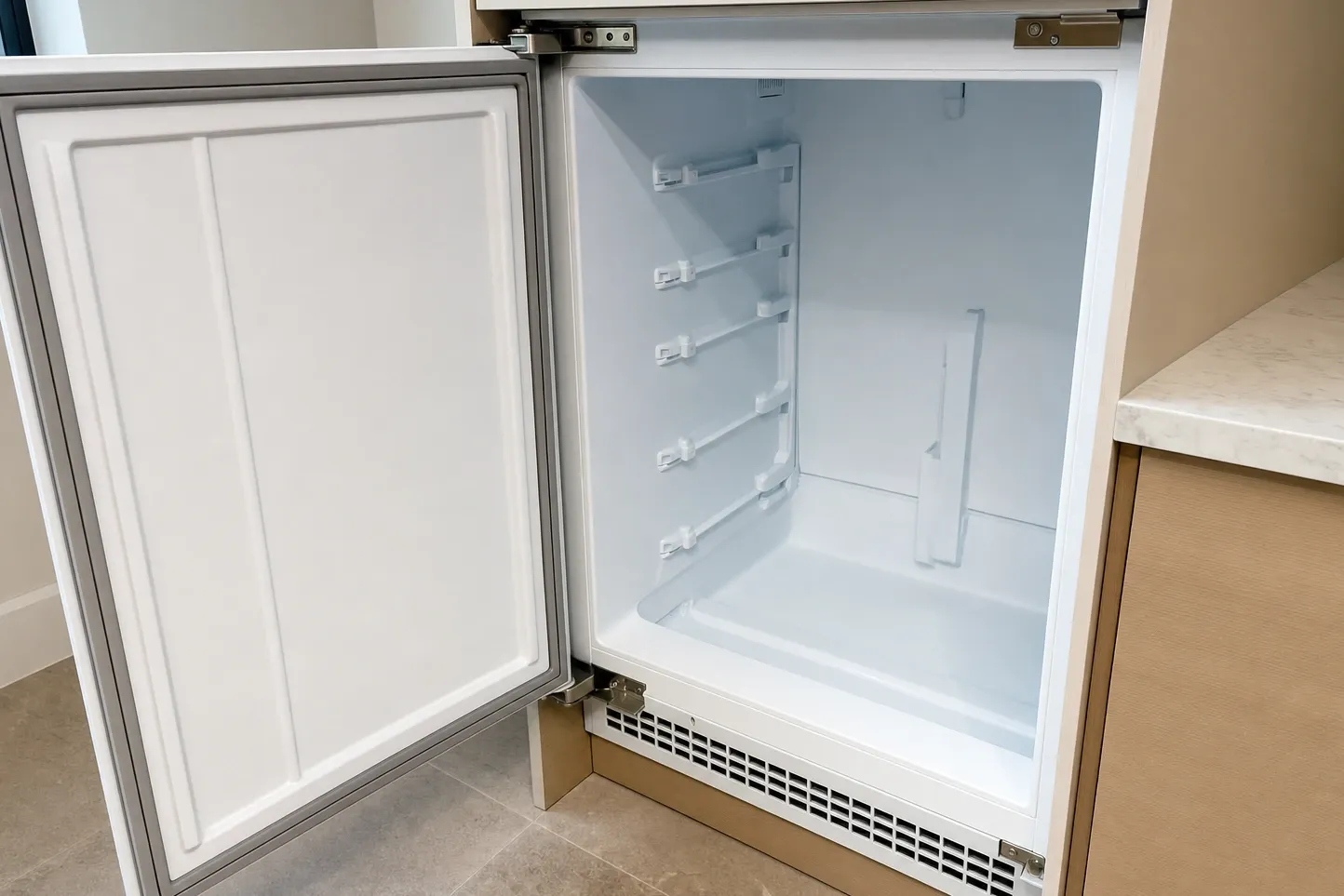
What it usually turns out to be
-
Cold air is escaping past the seal
Water appears on a surface when that surface is colder than the point at which the air beside it has to give up its moisture. A gasket that has stopped gripping lets a thin cold draught run out along the frame and chills the metal there below that point, so a bead of water forms on the outside of a cabinet that is otherwise behaving perfectly.
-
The door is no longer hanging square
Wear in a door hinge, or a closer that has lost the strength to finish the swing, drops the free edge of a heavy door by a fraction. The seal then touches unevenly rather than failing outright, which is why this version arrives as a damp patch in one place instead of water all round the opening. Hardware, not rubber, is the fix.
-
The cabinet is running colder than it needs to
Set a compartment lower than the food actually requires and every cold surface in it moves further away from room temperature, condensation included. The same thing happens when a temperature sensor has drifted and the control is chasing a reading that no longer matches the air, so the cabinet runs colder than the panel claims.
-
The kitchen itself is unusually damp
A dishwasher opened to steam at the end of a cycle, a long session at the range, a houseful of people — room moisture rises and the coldest metal in the room collects it. Denver kitchens are dry for most of the year, which is exactly why a frame that sweats week after week here is worth looking at rather than blaming on the weather.
What that means for your kitchen
Condensation is the polite early stage of a door fault. Left long enough it stops being a wipe and starts being a mark: swollen edges on a cabinet panel, a stain that will not come out of a painted frame, and a machine that has been running extra hours the whole time to replace the cold it was losing. None of that is dramatic, and all of it is avoidable by dealing with the wet frame while it is still only wet.
Follow-up questions
Is a little moisture around the door ever normal?
Briefly, yes. Open a door on a humid day, let warm air in, and a light haze on the frame that clears within the hour is only physics catching up. What is not normal is damp that returns every day, sits in the same spot, or leaves a mark on the joinery. That pattern says something has stopped sealing.
Can I just keep wiping it dry?
You can, and the cabinet will keep making more. The water is a symptom of warm air reaching cold metal, so drying the frame treats the puddle and not the leak, while the timber or painted surface beside it absorbs what you miss. Ring Viking Repair Denver Pros on (720) 903-2603 and have the seal and the hang checked instead.
Parts usually involved
These are the components tested on this symptom, in the order they get tested.
- Written by
- Clifford Nakamura
- Role
- Service technician — controls and intermittent faults
- Last checked