Part · Viking built-in refrigeration
What the door hinge and closer do on a Viking built-in — and how they wear
In one sentence
A built-in door is heavy before a cabinet panel goes on it, so the hinge and closer wear where nothing else does, and the first thing you lose is the last inch of the swing. — Viking Repair Denver Pros, (720) 903-2603
What it does
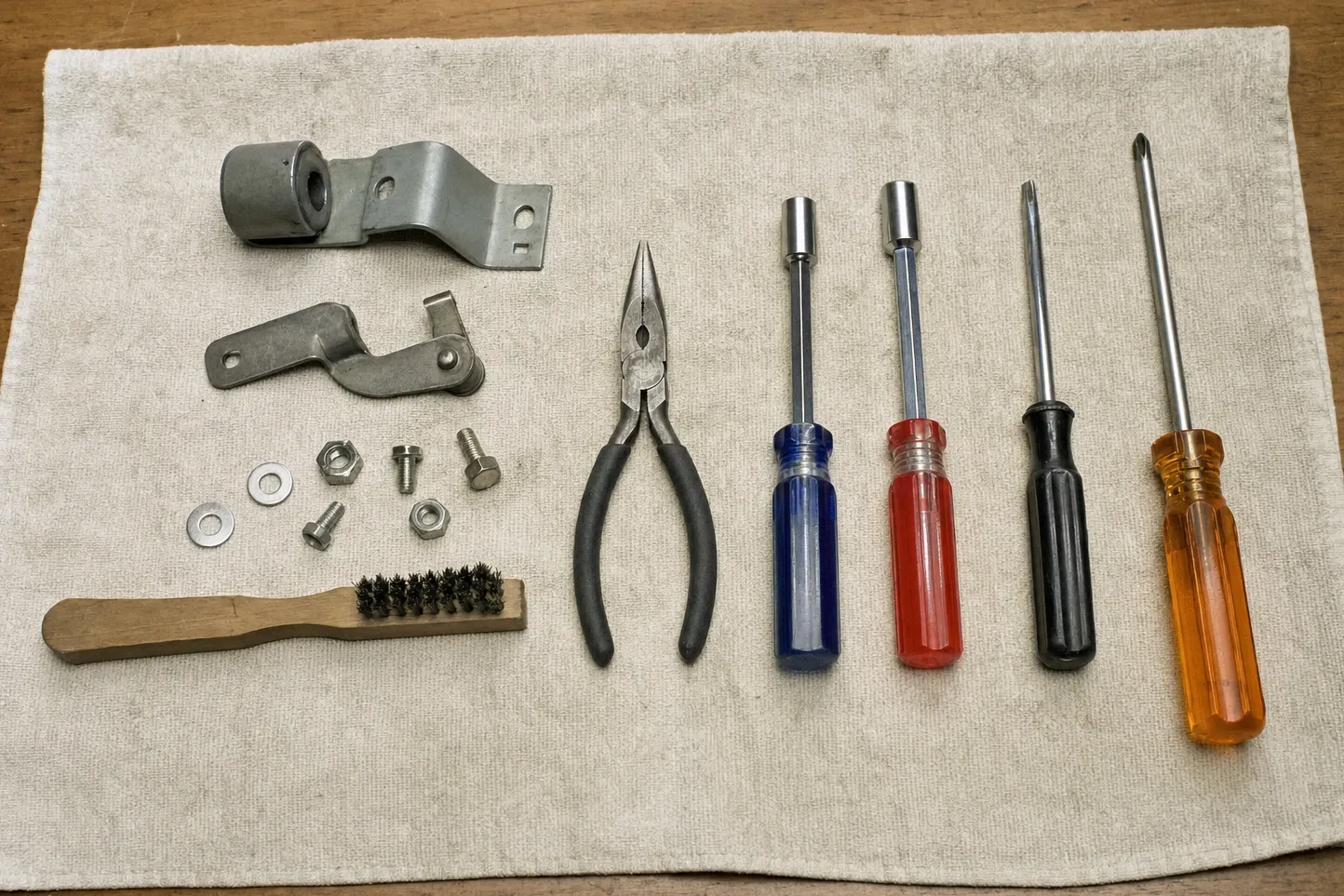
Two things hold that door and decide where it sits. The hinge carries the weight and fixes the door in its opening. Where a unit has a closer, that is the part taking over near the end of the swing to pull the door home. Both work against real mass — shelves, bottles, and on a panel-ready front the cabinetry too — and they are the only parts of a refrigerator under mechanical load every time someone opens it.
How it fails
Wear here is slow and invisible until the day the door stops behaving. The load always pulls the same way, so a bushing flattens on one side, a pin polishes into an oval, and the door sits a fraction low at the handle. Nobody sees a fraction. What they see is the seal failing at the top corner furthest from the hinge — exactly where a dropped door opens its first gap.
A closer gives up differently. It goes from pulling the door shut to merely holding it once you have pushed it, and then to neither. The tell is a door that used to finish the job on its own and now waits for a hand.
The third pattern belongs to remodels. Add a heavy panel to a door hung for a lighter one, or hang it out of square, and sound hardware carries a load it was never set up for. That is a geometry problem with a hinge-shaped symptom, diagnosed before any part is ordered.
Can you check it yourself?
No — and this is why.
No. Hinge work means holding a loaded door, and a cabinet panel with it, while the fixings come out; a door dropped at that moment lands on the joinery or on you. What is useful from the kitchen is the last few inches: open the door a hand's width, let go, and tell us whether it closes itself, stops dead, or drifts open.
Repair band
Quoted after the diagnosis, not before it.
There is no configured band for hinge and closer work, because what it takes depends on whether the door has to come off and whether a cabinet panel goes back on with it. That figure is written down for you at the visit, before anything is unbolted.
Follow-up questions
Can the door be adjusted rather than repaired?
Often, yes. A door sitting a few millimetres low, or standing proud at one corner, is usually an adjustment rather than a failure, and it is part of the same visit. It becomes a repair when the wear is in the hinge itself and no amount of adjustment holds the door where it is put.
My door closes, but only if I push it. Is that a fault?
It is worth a call. A door that needs a shove is a door somebody in a hurry will leave ajar, and an inch of gap overnight buys you a frosted freezer and a wet frame by morning. Ring Viking Repair Denver Pros on (720) 903-2603 and describe the last inch of the swing.
Symptoms it causes
If your unit is doing one of these, this part is on the list of things that get tested.
- Written by
- Clifford Nakamura
- Role
- Service technician — controls and intermittent faults
- Last checked