Part · Viking built-in refrigeration
What the evaporator coil does in a Viking refrigerator — and how it fails
In one sentence
This is the one surface in a Viking built-in that actually gets cold; everything else either blows air across it, keeps it clear of ice, or decides how much of its output each compartment receives. — Viking Repair Denver Pros, (720) 903-2603
What it does
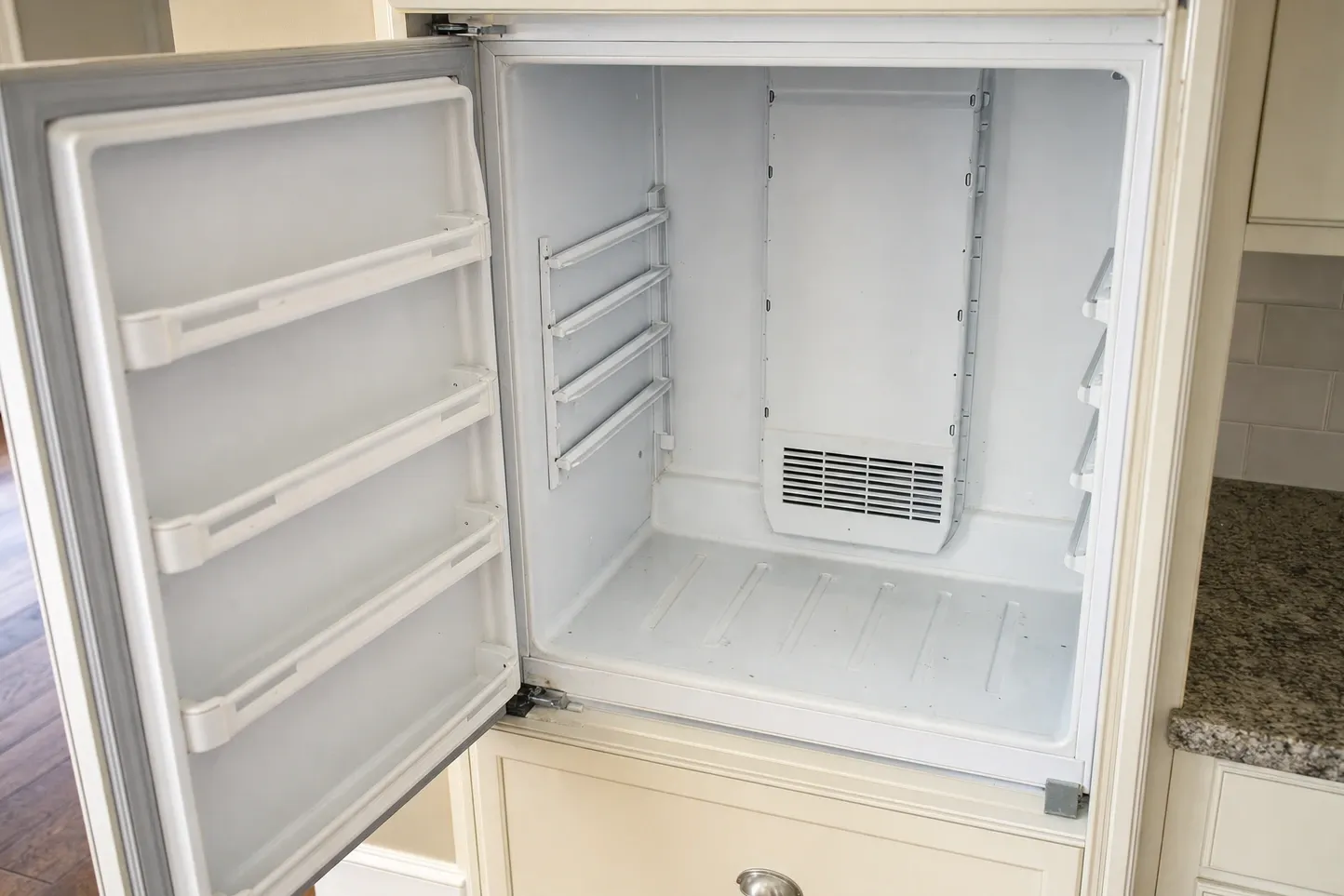
Liquid refrigerant arrives at this coil, boils inside its tubing, and boiling takes heat from whatever is around it — that is the moment cold gets made. The coil hides behind a panel, usually on the freezer side, and air pushed across it comes away chilled and carrying its moisture, which then settles on the tubing as frost. A little frost is normal and gets melted off on schedule. The coil itself has no moving parts and no service interval; it either passes refrigerant properly or it does not.
How it fails
Coils fail in two ways, and only one of them is the coil’s own doing.
The first is a leak. Aluminium and copper spend years in a wet, cold, occasionally salty environment, and a pinhole anywhere along the tubing lets the charge escape slowly. Symptoms arrive gradually: frost that used to cover the tubing evenly retreats into patches, the freezer stops holding, and the machine runs almost continuously without ever catching up. A leak also explains a unit that was recharged once and went warm again months later.
The second is ice that never leaves. Where defrost has failed, the coil disappears under a solid block, air can no longer reach it, and the whole cabinet warms while the coldest part of the machine is buried in frost. That is not a coil to replace — it is a defrost fault to find, and clearing the ice without finding it buys a fortnight.
The frost pattern is the honest indicator, which is why the panel comes off on the visit. Even coverage says the refrigerant side is healthy. Frost at one end and bare tubing at the other says the charge is low or something is restricting flow. A dry coil with a running compressor says the loop is empty.
Can you check it yourself?
No — and this is why.
No. Reaching it means emptying a compartment, unscrewing a panel and working around mains wiring and tubing under pressure, and a panel put back badly makes a new fault of its own. Report what you can see instead: whether the air arriving is cold at all, and whether frost is gathering where food sits.
Repair band
Compressor or sealed-system repair $1,370 to $3,400
The $89 visit buys the diagnosis and the figure for your own unit. Nothing is opened further and no part is ordered until you have seen that figure and said yes. Viking Repair Denver Pros, (720) 903-2603.
Follow-up questions
Is frost on the coil a problem by itself?
No, that is the coil doing its job. Moisture has to land somewhere, and it lands there. What matters is whether it gets cleared again on schedule: frost that builds week on week until it blocks the airway means the defrost side has stopped working, not that the coil is faulty.
Why is replacing a coil priced with the compressor?
Because it is the same class of work. The loop has to be recovered, the old coil cut out, a new one brazed in, and the system evacuated and recharged properly afterwards. That is why the band below covers both, and why the figure for your own unit follows the diagnosis rather than preceding it.
Symptoms it causes
If your unit is doing one of these, this part is on the list of things that get tested.
- Written by
- Clifford Nakamura
- Role
- Service technician — controls and intermittent faults
- Last checked